


B’more Healthy Communities for Kids (BHCK)
Community-level interventions combined with policy to combat obesity
Project Lead: Joel Gittelsohn, PhD, MSc
Description
 With limited access to stores that sell healthy foods like fresh fruits and vegetables, residents of low-income communities are especially susceptible to obesity and weight-related illnesses. Children, who often lack the means and education to change their own environments or make nutritionally sound decisions, face particular challenges.
B’more Healthy: Communities for Kids (BHCK) hopes to change that. This five-year, multi-level, multi-component intervention trial aims to improve the food environment in Baltimore City using several strategies, including:
- Working with small food stores and carryouts to increase access to healthier foods.
- Creating cost-effective partnerships between smaller city food stores and wholesalers.
- Helping young people make healthier food choices, including cooking healthy meals with their families.
- Developing computational models that depict the Baltimore food environment, allowing us to simulate the impact of different programs and policies, alone or in combination.
We work directly in the communities that need us most. Low-income neighborhoods that are also considered food deserts—places where children and families have little access to even the most basic staples of a nutritious, healthy diet, such as fresh produce and whole grain bread.
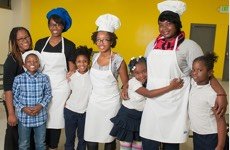 By examining how multiple factors at different levels converge to cause obesity in children, we’re developing a range of interventions, simulation models and other tools that we believe can promote better nutrition, not only by teaching kids how to make healthy choices, but by creating environments where healthy choices are easier to make.
BHCK includes five working groups:
Caregivers/Social Media, Recreation Centers-youth and youth leaders, Corner Stores/Carryouts, Environmental/Wholesaler and Policy. Each represent different levels within the Baltimore City food environment.
Cooperation and partnerships are key to our efforts—and our success.
Highlights
2014 - Current:
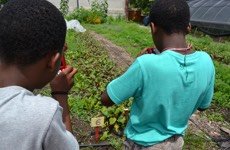 Completed the first wave of baseline data collection in June 2014 with urban African American youth and their caregivers (n=598 total), and began implementation of the BHCK Wave 1 program on July 1st 2014. Wave 1 will end on February 27th 2015.
- Developed the BHCK intervention, by creating a curriculum for training youth leaders (and trained 16 youth leaders) with the help of New Lens
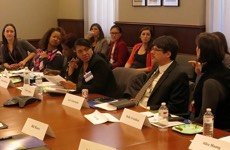
- Convened 6 city-wide policy working group meetings to engage 30+ members, including representatives: from the City Health Department, City Council, Department of Recreation and Parks, Office of Sustainability, Food Policy Advisory Committee, Baltimore City Public Schools, non-profits, and more.
 Partnered with 3 wholesalers in Baltimore City to provide discounts to store owners on select products, obtain gift cards for purchase of initial stock of BHCK promoted food, and labeled BHCK promoted of healthy foods at wholesalers’ warehouses.
- Performed a simulation using the Baltimore Low Income Food Environment model (BLIFE) at the request of a City Council member to test the potential impact of an urban farm tax credit on healthy food access in Baltimore City; we will continue to partner with other stakeholders to develop additional models.
Click here for addtional highlights.
Sample Presentations
- Anderson Steeves, E., Hopkins L., Henry J., Kharmats A., Gittelsohn J. Social Support for Healthy and Unhealthy Eating among Low-income, African American Adolescents in Baltimore City. Society of Behavioral Medicine. April 23-26, 2014. Philadelphia, PA
- Kharmats, A., L. Hopkins, E. Anderson Steeves, Y. Mui and J. Gittelsohn. “The more sugar and calories, the better? Children’s perspective on sugar-sweetened beverages.” Experimental Biology, Presented in San Diego, April 2014
- Gittelsohn J., “Community-based interventions for chronic disease prevention: Approaches for changing the food environment,” Paper presented in the session The Food Environment and Food Policy: Implications for Cancer Risk, at the Annual Research Conference on Food, Nutrition and Physical Activity of the American Institute for Cancer Research, Bethesda, Maryland, November 7-8, 2013
Sample Publications
- Melissa Sattler, Laura Hopkins, Elizabeth Anderson Steeves, Angelica Cristello,Morgan Mccloskey, Joel Gittelsohn & Kristen Hurley (2015): Characteristics of Youth Food Preparation in Low-Income, African American Homes: Associations with Healthy Eating Index Scores, Ecology of Food and Nutrition. PMID: 25706350
- Gudzune KA, Welsh C, Lane E, Chissell Z, Anderson Steeves E, Gittelsohn J. (2015) “Increasing access to fresh produce by partnering urban farms with corner stores: a pilot study in a low-income urban setting,” Public Health Nutrition, Feb 4:1-5. [Epub ahead of print] PMID: 25649045
- Anderson Steeves E, Martins PA, Gittelsohn J. (2014) “Changing the Food Environment for Obesity Prevention: Key Gaps and Future Directions,” Current Obesity Reports, Dec;3(4):451-458. PMID:25574452 PMCID: PMC4283210
- Gittelsohn J, Anderson Steeves E, Mui Y, Kharmats AY, Hopkins LC, Dennis D. B'more healthy communities for kids: Design of a multi-level intervention for obesity prevention for low-income African American children. BMC Public Health. 2014;14(1):942. PMID:25209072 PMCID: PMC4168194
- Coakley HL, Anderson Steeves E, Jones-Smith JC, Hopkins L, Braunstein N, Mui Y , Gittelsohn J (2014) Where Do Low-Income Children Get Food? Combining Ground-Truthing and Technology to Improve Accuracy in Establishing Children’s Food Purchasing Behaviors, Journal of Hunger & Environmental Nutrition, 9:3, 418-430
Contact Us: To find out more information about BHCK or how to get involved, please email the Global Obesity Prevention Center at Johns Hopkins directly here.