


Policy Working Group
When it comes to fighting global obesity, some of the greatest potential lies at the policy level.
 Whether from a municipal, state, federal or international level, decision and policy makers are among the best positioned to enact change and promote better health. But it’s hard to solve a problem without a comprehensive understanding of it.
Since obesity is such a complex problem with a dynamic system of factors, it requires complex solutions.
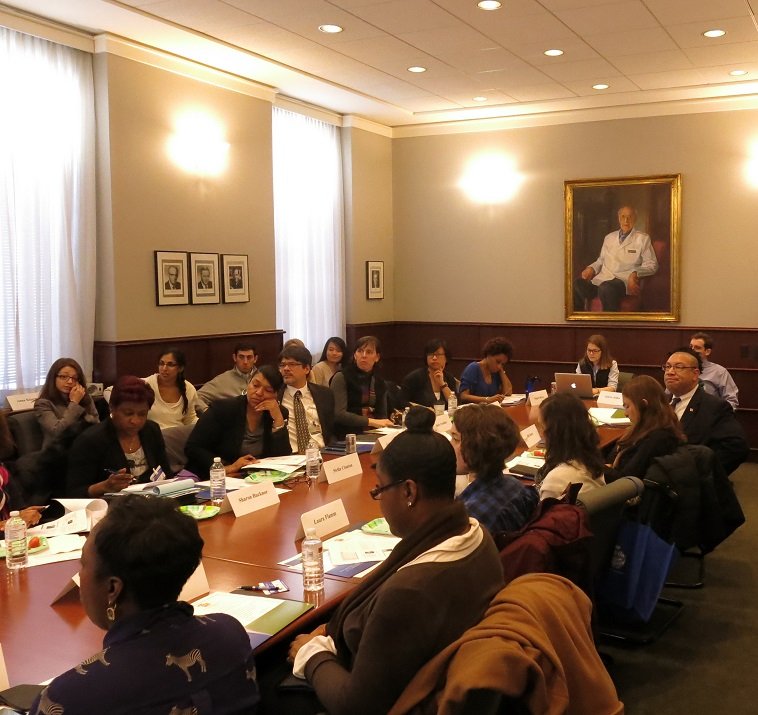 Designed to bridge the gap between research and policy, the Policy Working Group plays a key role in the efforts of the Global Obesity Prevention Center at Johns Hopkins University. “We want to engage and facilitate communications with key stakeholders in the obesity landscape, in hopes of promoting a healthier food environment in Baltimore City,” says Joel Gittelsohn, PhD, Project Lead of B’More Healthy Communities for Kids, under which the working group operates. “By integrating systems science modeling, we can explore program and policy ideas in a new way to improve nutrition and decrease obesity throughout Baltimore’s communities.”
To date, membership in the working group includes nearly 40 participants with representation from:
- Baltimore City Health Department
- City Council
- Department of Planning
- Baltimore Food Policy Initiative
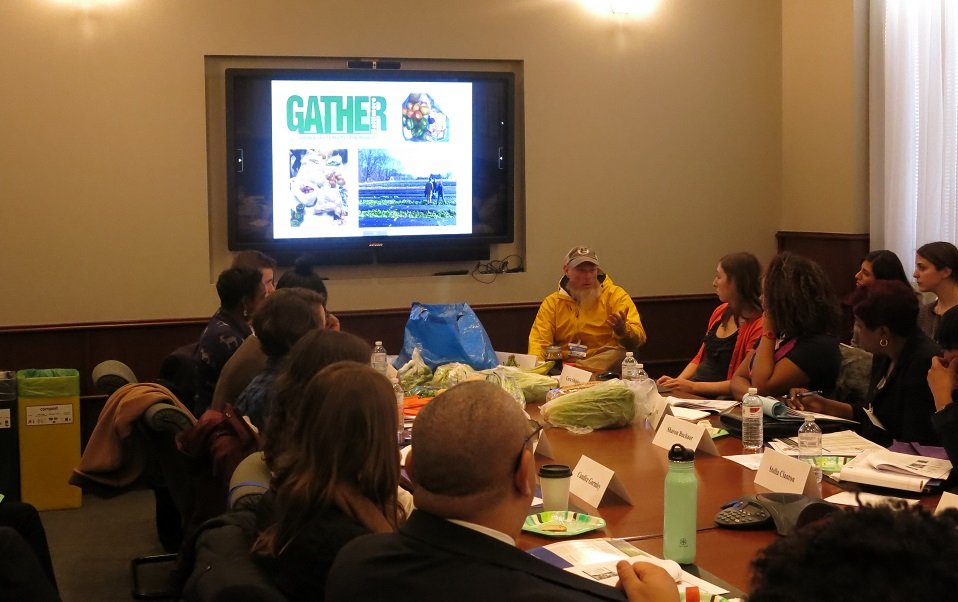 Baltimore City Public Schools, Food and Nutrition Services
- Baltimore Partnership to End Childhood Hunger
- Office of Sustainability
- Baltimore City Department of Recreation and Parks
- Gather Baltimore
- Department of Health and Mental Hygiene
- Center for a Livable Future
- B. Green & Co., Inc.
- DHMH Center for Chronic Disease Prevention and Control
- Family League of Baltimore
Unique to the Policy Working Group is the use of computational modeling to simulate the potential impact of programs and policies under consideration for reducing obesity risk. The Virtual Population Obesity Prevention (VPOP) Lab is an example of a computational simulation model that the Policy Working Group is working on.
At the request of a Baltimore City Councilman, the working group simulated the potential impact of an urban agriculture tax credit on dietary intake of fruits and vegetables and adolescent obesity risk over time. Results from the simulation were presented at a public hearing, and a video of this testimony can be found here.